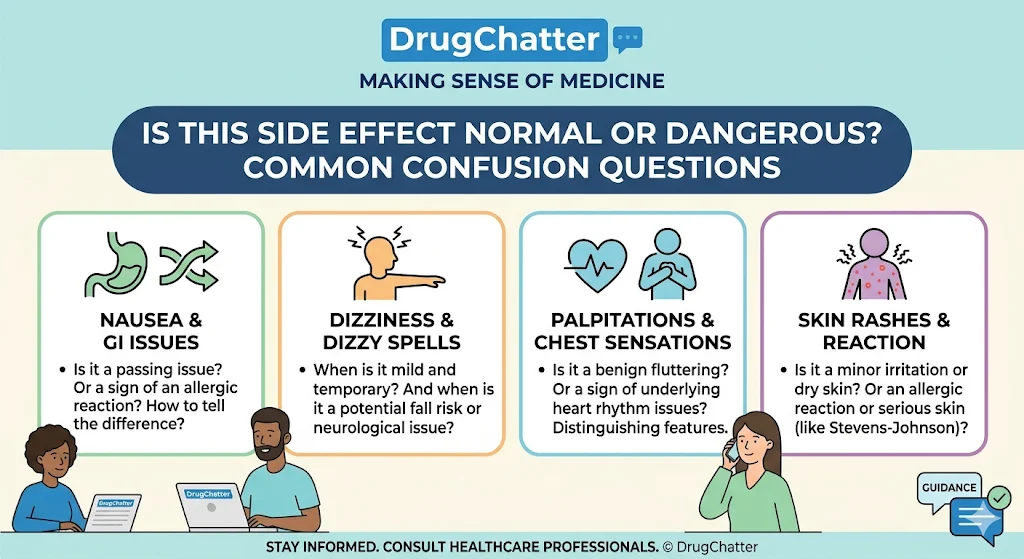
Patients rarely ask “what’s dangerous?” in the abstract. They ask it the way you’d ask about traffic: Is this normal? Am I overreacting? Is this the kind of thing that can wait? Below are some of the most common “is this side effect normal or dangerous?”-type confusions we’ve seen, gathered from DrugChatter questions and answered in the linked discussions.
1) The side effect isn’t happening the way you expected
One of the hardest parts about side effects is their variability—some people feel them early, others don’t notice anything, and still others experience different intensity. If the timing or pattern doesn’t match what you’ve heard, it’s easy to conclude the problem must be either nothing… or something entirely different.
- Why is lipitor’s side effect flexibility so variable among patients?
- How long does it take for the side effects to subside on lipitor?
- Can lipitor’s flexibility side effect lead to long term issues?
2) “I combined it with something else” (and now the symptoms have teeth)
When symptoms show up after a change—new supplement, new interaction, new habit—people understandably try to identify the culprit. Sometimes the interaction is real and clinically important; sometimes it’s a coincidence; and sometimes it’s a matter of dose, timing, or patient-specific risk.
- How can lipitor interaction with ssris impact elderly’s health?
- Can probiotics interfere with lipitor’s cholesterol lowering effect?
- Coumadin tylenol?
- Drinking alcohol on vivitrol?
- What are cosentyx’s drug interactions?
- Acyclovir interactions with anti depressants?
3) The regimen feels “off” (dose, device, schedule)
A side effect can be “normal” for a given drug dose—and still be a sign you need adjustment if the exposure wasn’t what you thought. It’s also common for people to worry they’re using a medication incorrectly, especially with injections.
- How does patient weight affect cosentyx dosing?
- Is it safe to use one syringe for multiple cosentyx shots?
- What medical conditions determine cosentyx duration?
- Pluvicto dosing?
- Mircera dosing?
4) Age and biology: “Will this hit me differently?”
“Normal” side effects can still be more likely—or more dangerous—in older adults or people with specific organ vulnerabilities. This is one of the most common places where confusion becomes risk.
- Are there any elderly restrictions for cosentyx?
- Does tigecycline’s effect on liver differ in elderly?
- Is it common for lipitor and glucosamine users to experience muscle pain?
5) Symptoms after starting a new drug: “Is this the medication talking, or something else?”
Switching therapies is when people feel the most powerless. A new symptom can be expected, but it can also be the first clue of a problem that deserves prompt attention. The key is to match the symptom to the medication’s known risk profile—and know when to escalate.
- What are the potential risks of using tigecycline?
- Does tigecycline’s effect on liver differ in elderly?
- Dailymed fosfomycin tromethamine not indicated pyelonephritis?
- Symdeko side effects?
- Calquence warnings?
6) “Long-term” questions: is this harmless today, harmful tomorrow?
Sometimes the fear isn’t the symptom—it’s what it might mean down the line. Patients want to know whether temporary discomfort is “the normal price” or the beginning of an avoidable trajectory.
- What medical conditions determine cosentyx duration?
- Can cosentyx fully conceal severe joint disease?
- How does ozempic’s long term use regulate blood sugar?
- Can probiotics interfere with lipitor’s cholesterol lowering effect?
How to treat these questions like a checklist
When you’re trying to decide whether a side effect is “normal” or “dangerous,” the most useful questions are the boring ones: what drug, what dose, what timing, what else was taken, and who is the patient (age, liver/kidney history, comorbidities). The linked answers below are exactly in that spirit—practical, medication-specific context for the kinds of worries that keep coming up.
Start with your closest match: read the relevant link above, then use it to prepare the right follow-up questions for your prescriber or pharmacist. And if you have severe symptoms (trouble breathing, swelling of the face/throat, chest pain, fainting, severe allergic symptoms, or rapidly worsening illness), don’t wait for a forum answer—seek urgent care.
Note: This post is compiled from general “confusion” questions and answers. It is not medical advice for any individual case.