There’s a particular genre of medical question that never seems to die online: not “What does this drug do?” but “Which one wins?”
Patients, caregivers, and increasingly AI users are flooding drug forums with comparison questions that sound deceptively simple:
Is one drug better?
Safer?
Easier to tolerate?
Less likely to wreck your stomach, liver, sleep, libido, or wallet?
And the interesting thing is that these questions rarely stay inside neat FDA-label boundaries. They become practical, lived-experience questions. The kind physicians answer in 30-second hallway conversations and pharmacists answer while someone’s already holding a prescription bag.
Looking through the traffic patterns on DrugChatter, several themes emerge again and again: GLP-1 rivalry, arthritis biologic wars, painkiller substitution economics, and a growing obsession with side-effect optimization.
Here are some of the biggest “Drug A vs. Drug B” conversations people can’t stop asking.
GLP-1s: The New Coke vs. Pepsi
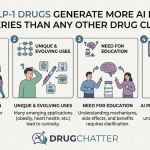
No category generates more comparison traffic right now than obesity and diabetes drugs.
That question alone captures the current pharmaceutical zeitgeist. Not whether these drugs work — everyone assumes they do — but which delivers more weight loss, fewer side effects, and longer durability.
Then the comparisons start splintering into more specialized territory:
This is what happens when a drug class escapes endocrinology and enters culture. People aren’t merely asking about efficacy anymore. They’re trying to map the future landscape before it arrives.
And then come the second-order questions — the ones that reveal what patients actually worry about after starting therapy:
This is where modern drug comparison gets messy. Patients aren’t choosing between abstract efficacy curves. They’re balancing immune suppression, insurance formularies, travel schedules, and whether they can safely get a booster shot.
Advil vs. Literally the Entire Medicine Cabinet
Ibuprofen may be the undisputed heavyweight champion of interaction anxiety.
This reflects a broader healthcare reality: polypharmacy is no longer an edge case. It’s normal.
And patients are increasingly doing their own systems integration.
What These Questions Actually Reveal
The interesting part isn’t that people compare drugs. They always have.
It’s that the comparisons are becoming more nuanced, more mechanistic, and more consumer-oriented at the same time.
Patients now think like:
formulary managers,
biohackers,
Reddit moderators,
and clinical pharmacologists,
often simultaneously.
They want to know:
which drug works faster,
which combines safely,
which causes fewer GI issues,
which plays nicely with supplements,
which still works after years,
and which insurance company is about to stop covering it.
That’s no longer passive healthcare consumption. It’s active portfolio management.
And if you want to understand where pharmaceutical attention is heading next, you could do worse than watching the questions patients ask when they think nobody’s grading the exam.