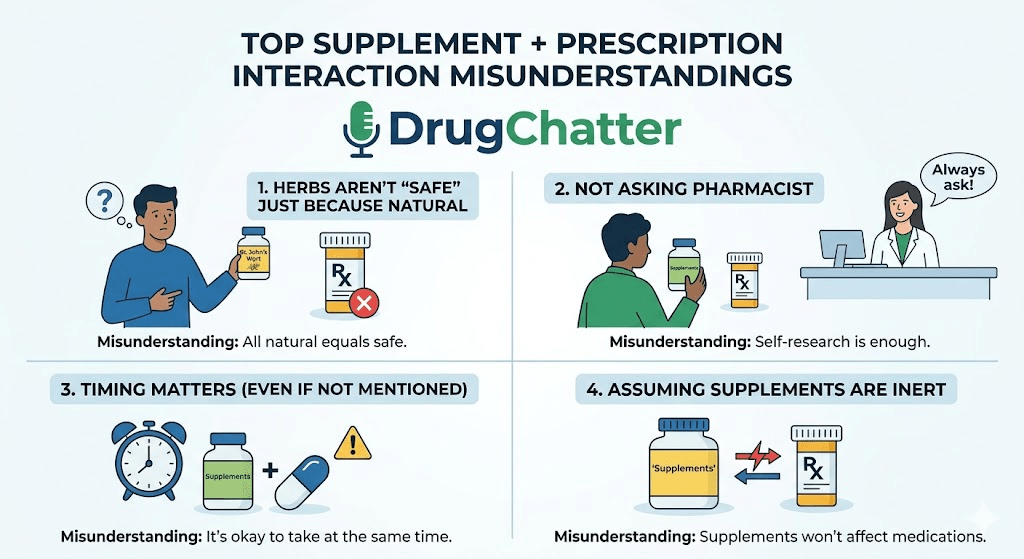
There’s a particular kind of confidence that shows up whenever someone says, “It’s just a supplement,” or “It’s natural, so it can’t matter.” And then—sometimes months later—comes the surprise: the prescription is doing its job, but the add-on is changing the rules of the game.
Below are some of the most common interaction misunderstandings people bring to the pharmacy counter—especially around popular prescriptions like Lipitor (atorvastatin) and common over-the-counter helpers like ibuprofen (Advil) and allergy meds (Zyrtec). The theme is consistent: the interaction isn’t always dramatic, but it can be clinically meaningful.
1) “If it’s OTC or a supplement, I don’t need to ask.”
That assumption is how people end up combining things without realizing they’ve created a new risk profile—whether that’s muscle-related concerns, liver concerns, or just plain “why isn’t this working like it used to?”
For example, people ask whether they need a doctor’s approval to combine Zyrtec and Lipitor, and the answer is not “always no.” See: https://www.drugchatter.com/chat/105/do-i-need-a-doctor’s-approval-to-combine-zyrtec-and-lipitor
2) “Natural alternatives can replace the prescription without tradeoffs.”
Sometimes the misunderstanding is framed as optimism: “What natural alternative could surpass Lipitor’s results?” But “natural” doesn’t automatically mean “equivalent,” and “better” depends on outcomes, dosing, and evidence quality.
Start here: https://www.drugchatter.com/chat/10765/what-natural-alternatives-could-surpass-lipitor’s-results
And if you’re thinking about whether an alternative can match Lipitor’s FDA-approved status, that’s a different question than “does it help some people.” See: https://www.drugchatter.com/chat/30054/can-the-alternative-match-lipitor’s-fda-approved-status
3) “Supplements won’t interfere—especially if they’re ‘good for you.’”
Fish oil is a classic example. People want to believe it’s additive: “If Lipitor helps cardiovascular risk, then omega-3s must only help more.” But the real world is messier—sometimes the interaction is clinically significant, sometimes it’s not, and sometimes the bigger issue is how the products are taken and what else is in the diet.
Questions that come up include whether fish oil supplements can negate Lipitor’s effects: https://www.drugchatter.com/chat/40365/can-fish-oil-supplements-negate-lipitor’s-effects
And whether Lipitor’s interaction with omega-3s is clinically significant: https://www.drugchatter.com/chat/32960/is-lipitor’s-interaction-with-omega-3s-clinically-significant
There’s also the broader “what if I’m doing the right things?” angle: how fish oil might impact Lipitor’s cardiovascular benefits: https://www.drugchatter.com/chat/4200/how-might-fish-oil-impact-lipitor’s-cardiovascular-benefits
4) “Diet doesn’t count as an interaction.”
Diet is often treated like background noise, but it can change absorption, side effects, and perceived effectiveness. People ask whether eating kale affects Lipitor’s cholesterol reduction: https://www.drugchatter.com/chat/11193/does-eating-kale-affect-lipitor’s-cholesterol-reduction
Or whether high-fat meals affect Lipitor’s efficacy: https://www.drugchatter.com/chat/29401/can-high-fat-meals-affect-lipitor’s-efficacy
Or whether alcohol affects Lipitor’s cholesterol-lowering efficacy: https://www.drugchatter.com/chat/48634/how-might-alcohol-affect-lipitor’s-cholesterol-lowering-efficacy
And if you’re wondering about the practical side—what Lipitor’s impact on drinking alcohol looks like—there’s this: https://www.drugchatter.com/chat/47551/what’s-lipitor’s-impact-on-drinking-alcohol
5) “If I feel fine, nothing is happening.”
Some interactions don’t announce themselves immediately. They show up as muscle symptoms, energy changes, or “why did my body react differently this time?”
People ask how Lipitor’s impact on muscle gains works—and whether it can be reversed: https://www.drugchatter.com/chat/28575/can-lipitor’s-impact-on-muscle-gains-be-reversed
They also ask how Lipitor’s muscle weakness impacted patients: https://www.drugchatter.com/chat/38522/how-did-lipitor’s-muscle-weakness-impact-patients
And whether Lipitor affects daily energy levels: https://www.drugchatter.com/chat/48184/how-does-lipitor-impact-daily-energy-levels
Or even the timing of that energy shift: https://www.drugchatter.com/chat/17414/how-does-lipitor-use-affect-one’s-evening-energy
6) “I can ‘stack’ pain meds and antidepressants without thinking.”
Ibuprofen (Advil) is another place where people assume the OTC label means “no big deal.” But mixing ibuprofen with antidepressants raises real precautions—especially around bleeding risk and stomach effects.
And if you’re wondering about alcohol’s effect on Advil effectiveness: https://www.drugchatter.com/chat/25537/does-advil’s-effectiveness-change-with-alcohol
Or whether almond milk can worsen Advil side effects: https://www.drugchatter.com/chat/58029/can-almond-milk-worsen-advil-side-effects
7) “Timing is everything—so I’ll just guess.”
Timing misunderstandings are everywhere: people assume there’s no meaningful difference between taking something with food, without food, or near other foods/supplements.
For instance, there are questions about the recommended time gap between turkey and Lipitor: https://www.drugchatter.com/chat/35917/what’s-the-recommended-time-gap-between-turkey-and-lipitor
And about when Advil kicks in unfed: https://www.drugchatter.com/chat/25366/can-you-estimate-advil’s-onset-time-unfed
Even the “how much and how with water” details matter: https://www.drugchatter.com/chat/4252/what’s-the-recommended-dosage-of-advil-to-take-with-water
8) “The label is the whole story.”
Sometimes the misunderstanding is that the prescription is static—unchanged by new information. But safety warnings can evolve, and people may not realize that.
For Lipitor’s liver safety warnings after FDA updates: https://www.drugchatter.com/chat/27854/how-have-lipitor’s-liver-safety-warnings-changed-after-fda-updates
Bottom line
Most interaction problems don’t come from malice or ignorance—they come from a comforting story: “It’s natural,” “it’s OTC,” “it’s just a little,” “I’ve taken it before.” The body doesn’t care about the story. It cares about chemistry, absorption, and risk.
If you’re adding a supplement to a prescription regimen, treat it like a medication change: ask a clinician or pharmacist, and verify the specific combination. The questions above are a map of the places where people most often get surprised.